
If you’ve taken a class at Chaka, you’ve probably seen AMRAP written on the board. It stands for “as many rounds or reps as possible” within a set amount of time. If you have no idea what or have never heard of what AMRAP means, just bear with me.
The workout has a finish time. What you do with the time in between is where the learning happens. You choose a pace. You work through the movements. You take a breath when you need one, and then you get started again. Some days you feel strong and move steadily. Other days, every round takes a little more effort.
Both days count.
That’s what I like about the AMRAP mentality. It gives us a chance to practice making progress with what we have that day.
Find a pace you can keep.
We’ve all done it: the clock starts, we come out fast, and two minutes later we’re wondering how we’re going to survive the next ten.
sAMRAPs teach us to think ahead. Can you maintain that pace? Should you break up those reps earlier? Would a slightly slower first round help you keep moving later?
With practice, you learn more about your own effort. You start making choices that help you finish strong.
A break can be part of the plan.
Putting the weight down doesn’t mean the workout is over. Taking a few breaths can help you reset and return to the next set with better control.
The skill is learning to recognize what you need. Sometimes you’re ready to pick the weight back up. Sometimes you need a longer rest or help from your coach adjusting the workout.
At Chaka, we want you working hard while moving well. The reps should still look like the movement we’re trying to train.
Your workout belongs to you.
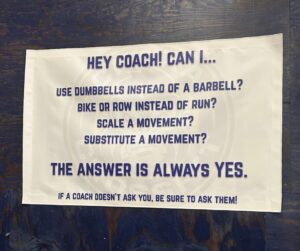
During an AMRAP, people may use different weights, different movement options, or different rep counts. Everyone is working within the same clock, but each person has a different starting point.
Your job is to choose a challenge that fits you and give it an honest effort.
Maybe your progress is one more round. Maybe it’s steadier pacing, better squat depth, or feeling confident with a movement that used to intimidate you. The score captures part of the workout. There’s usually more to the story.
Practice coming back to the next rep.
There’s often a point in an AMRAP when you look at the clock and wish you were further along. Thinking about all the work still ahead can make it feel overwhelming.
So bring your attention back to something manageable.
Finish these three reps. Walk over to the next station. Start the next round.
That’s useful practice for the rest of your training, too. You don’t have to solve every goal in one class. You need a next step you can take, then enough consistency to keep building.
The clock will eventually stop. Some days you’ll be proud of your score. Other days, you’ll be proud that you showed up and worked through a tough session.
An AMRAP gives us room to practice both effort and judgment: when to push, when to recover, and how to keep making progress.
And those are skills we can use every time we walk into the gym. But skills take practice. So the next time you’re faced with an AMRAP, think about your plan, put it into practice, and keep making progress.