Nothing fills my heart more than watching people succeed. You get to see a lot of it in the fitness world. I think it may be most special to me because I know exactly how easy it is to sit on the couch rather than show up and work to hit a goal.
With the New Year, setting goals is the thing. The biggest goals we see are people wanting pull ups or some kind of pull variation. I remember not having pull ups. I was fit and strong, and I could not do a pull up. I remember my trainer would have me grab on to the pull up bar and hold my feet and help push me up while I pulled. I told him, “I will never get a pull up.” He said, “Sure you will.” I never believed him.
It wasn’t until I started CrossFit and pull ups showed up often that I started to shift my mindset. Because here’s the truth: pull ups do take practice. A lot of it. They take consistency, patience, and a little grit. But they also take the right progressions at the right time, and that’s the part I didn’t have when I was learning.
Back in the day, it was shameful to substitute a prescribed movement in a workout. When you scaled, it’s not like they yelled, “Shame! Shame!” while ringing a bell, but you had to provide your score to the coach and then list everything you substituted. It sure felt shameful – like scaling meant you were “less than,” instead of simply being smart and building the foundation you needed.
That’s exactly what we do differently at Chaka.
At Chaka we provide various pulling variations to help people improve their pulling strength. When they show up in workouts, we have ring rows as an alternative, but also additional variations for those who want to improve.
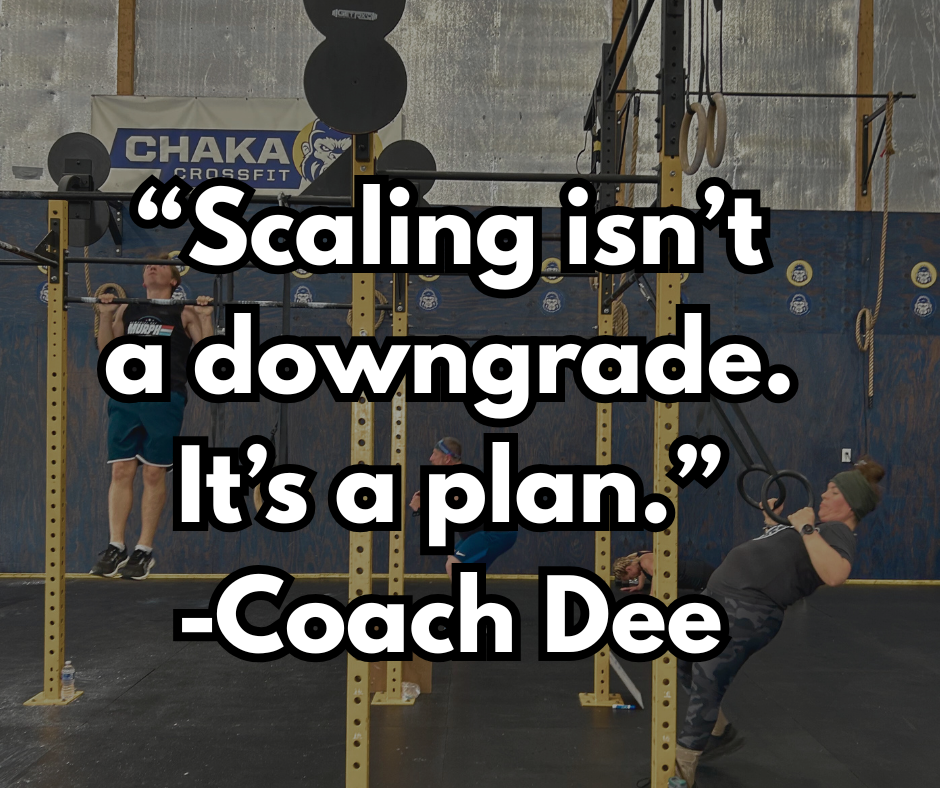
Because scaling isn’t a downgrade. It’s a plan.
Pull ups aren’t just “upper body strength.”
- Most people think pull ups are all arms. They’re not. Pull ups are a full-body skill that require:
- Grip strength (yes, your hands get tired before your back does sometimes)
- Shoulder stability (controlling the joint so it can stay safe under load)
- Back strength (lats and upper back doing the heavy lifting)
- Core control (keeping tension so your body moves as one unit)
- Timing and coordination (even for strict pull ups)
So when someone says, “I’m just not strong enough,” I usually say, “Not yet – and we’re going to build it.”
Our approach during class: you’re not on your own.
One thing I remember from my own journey was feeling like I had to figure it out alone. I’d do the workout, maybe try a few extra reps here and there, and hope one day it clicked. Sometimes it worked. Most of the time it felt like throwing spaghetti at the wall.
At Chaka, we don’t do that.
When pull ups show up, we’re not just giving you “ring rows” and calling it a day. We coach you into the best option for where you are right now, and we keep nudging you forward without making you feel like you’re behind.
Here are a few examples of what that looks like in class:
- Ring Rows (foundation option): perfect for building pulling strength, body tension, and control. We can adjust the difficulty instantly by changing your body angle.
- Band-Assisted Pull Ups: great when you’re ready to practice the movement pattern while still getting quality reps.
- Negatives (eccentrics): stepping up to the bar and lowering slowly builds strength fast and teaches control.
- Isometric Holds: holding the top, halfway, or even just active hang positions teaches you how to “own” the movement.
- Scapular Pulls / Active Hangs: learning to engage your shoulders and lats so you’re not just hanging off your joints.
Accessory work we sneak in: rows, lat work, core engagement, grip training—because the pull up is the result of a lot of small pieces coming together.
And the most important part: we help you pick the right thing for that day. Some days you need volume. Some days you need control. Some days you need confidence.
Yes, it takes practice…but we have your back.
If your goal is your first pull up, here’s what I want you to hear: you’re not “bad at pull ups.” You’re just in the building phase.
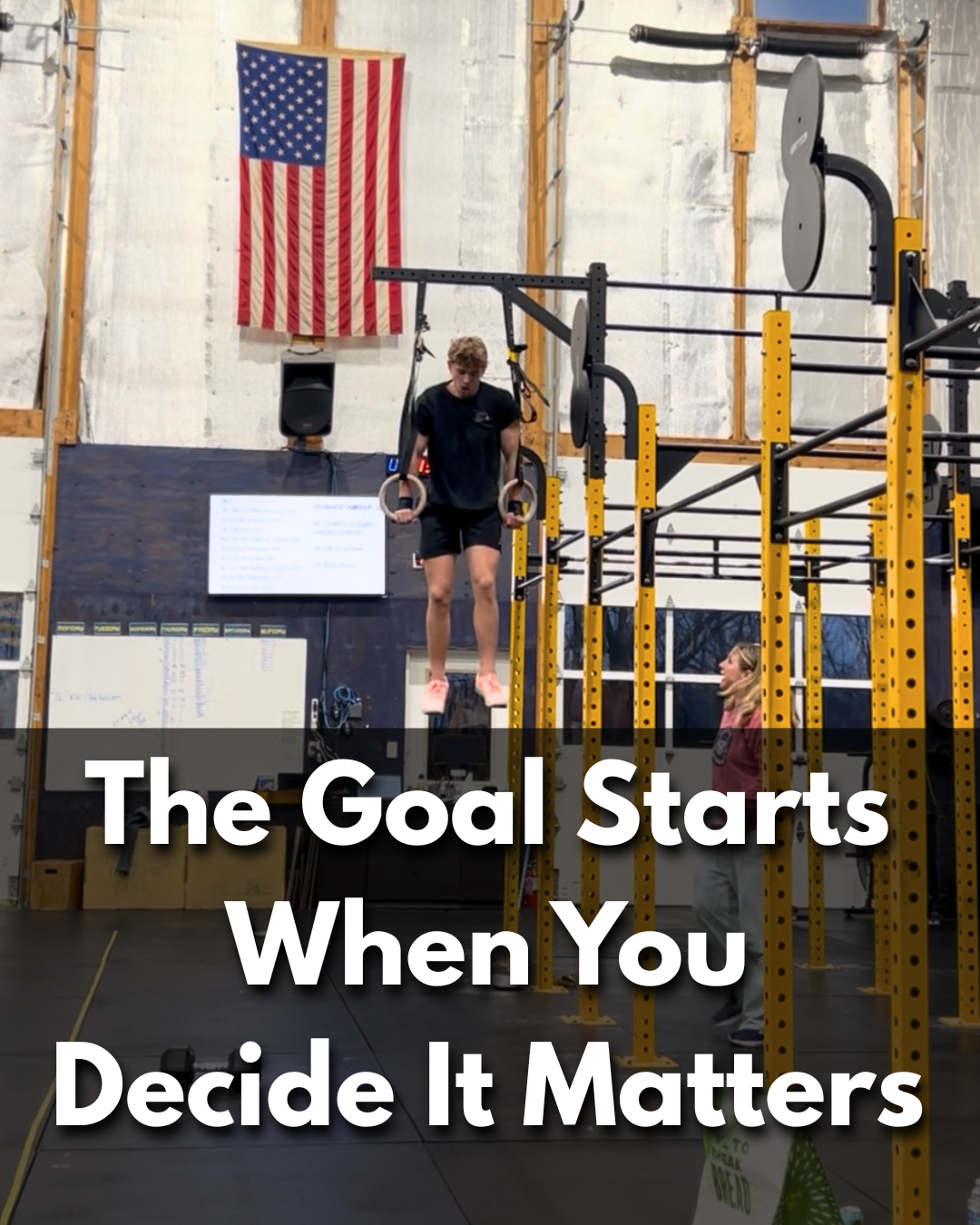
Pull ups are one of those skills where progress can feel slow…until suddenly it isn’t. One day your negative is a little smoother. One day you need a lighter band. One day you surprise yourself and your chin clears the bar. And the room loses its mind (because we do that here).
That’s the Chaka difference.
You don’t have to guess. You don’t have to feel embarrassed. You don’t have to “earn” the right to scale. You show up, we meet you where you are, and we keep giving you the next best step.
So if pull ups are on your 2026 goal list, tell a coach. Seriously, tell us! We’ll help you choose a progression, we’ll help you practice it when it shows up in workouts, and we’ll celebrate the small wins along the way until that big one happens.
Because pull ups do take a lot of practice… but at Chaka, you’re not practicing alone.